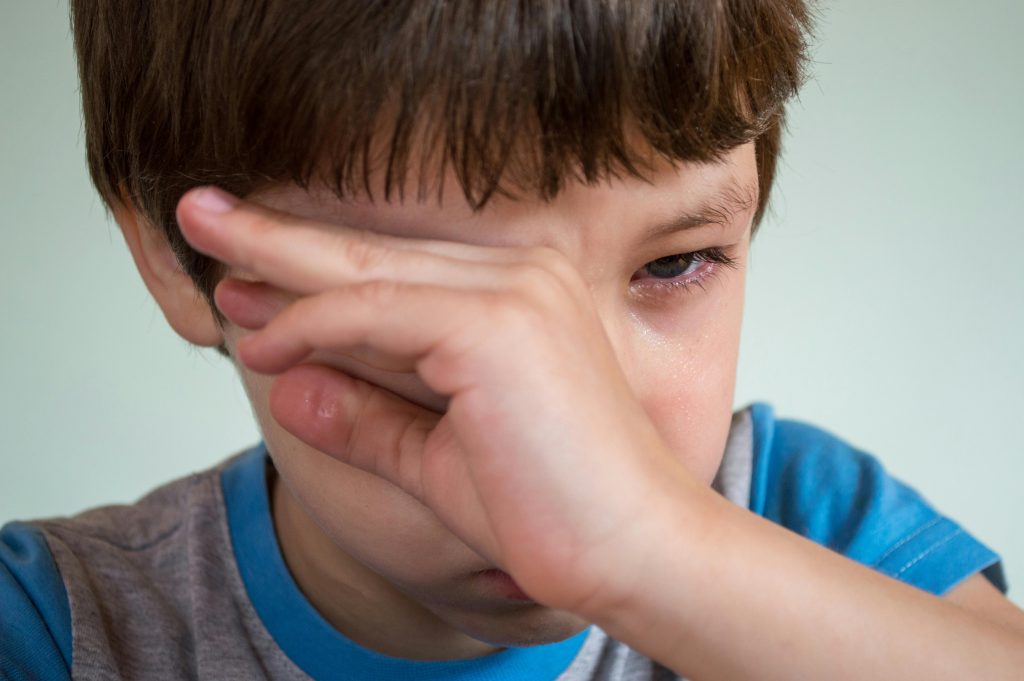
Sam was three when he began asking questions without words.
He didn’t ask, “Where’s Mama?
He asked; by wrapping himself tighter cotton blanket. The one she used to wrap around him on rainy days. He asked, by pressing his nose into its faded corner. Hoping to remember the smell of someone whose arms had vanished.
In therapy, we call this nonverbal grief. The kind toddlers carry in gestures, in clinging, in silence. A grief that doesn’t speak, but echoes.
At nap time, Sam rarely slept.
His eyelids twitched beneath the weight of imagined goodbyes. He’d sit up with a drawing clenched in his fist: a stick figure with big eyes, floating above a house.
“Is this Mama?” I asked gently.
“No,” he said. “She’s under the clouds. I just drew her so I can see her sometimes.”

💭 Introjected beliefs begins forming here, even before language.
“If I don’t cry, maybe I’ll be good enough.”
“If I forget, maybe the others won’t think I’m broken.”
“If I pretend she’s still here, my tummy won’t hurt so much.”
As therapists, we become co-authors in these early stories. Not to rewrite the loss, but to make space for its meaning. We offer the child containment—not just emotional, but symbolic. In Sam’s case, we created a small memory box together. Inside went:
- A button (“Her coat had lots”)
- A spritz of lavender on cotton (“She smelled like this sometimes”)
Each item was a tether, not to the pain, but to his truth. With time, Sam’s started inviting others into the narrative. A cousin. A teacher. Even a teddy named “Braver.” His drawings changed: fewer clouds, more bridges.
And in one final session he transitioned to group work, he looked at me and said:
“She didn’t forget me. I just think… she had to go be a cloud for a while.”
🕊️ Healing begins when the story is allowed to exist without shame.
Are you a caregiver, educator, or therapist seeking ways to support a grieving child?
Let’s co-create stories of safety, meaning, and presence, tenderly, together.
📩 Book a therapeutic storytelling session or consultation today.
Message me to begin. The healing starts with one conversation.
By Naazi Morad,
