
By A Mother Who Remembers What You Forget
By: Naazi Morad

Ask me how I fed you when the cupboards were bare. Ask me what my hands looked like after the late shift. Ask me how I mended the broken shoelace so you’d run without knowing scarcity.
Ask me, not because I need praise. Ask me, because knowing your roots gives you wings that won’t wilt in arrogance.
You are grown, yes. But don’t grow past memory. Don’t wear your shoes so high they trample the cradle that bore them. Ask me. And I will tell you the kind of love that didn’t need an audience. Ask Me How I Held You: A Mother’s Quiet Legacy
By: A Woman Who Was There First

There is a grief that does not announce itself. It walks quietly behind old photos and unanswered texts, behind the high heels of children who used to fit in the cradle. It is the grief of the mother who was once the center of her child’s universe, now edited out of their emotional timeline. We see it in today’s adult children, self-assured, expressive, boundary-wise. Their voices are confident, their independence prized. Yet somewhere between “I’m grown” and “I’m gone,” they lose the art of asking.
The Psychology of Disconnection
Modern psychology shows that in the pursuit of autonomy; many young adults lean into differentiation the process of separating emotionally from caregivers to shape identity. This is normal. Healthy, even. But when autonomy becomes entitlement, and boundaries become barriers to empathy, we create a generation too busy to ask the questions that build legacy.
Questions like: Where did you work, Mum? What did you do when food ran out, Dad? How did you clothe me when the salary didn’t stretch? These are not just questions. They’re acknowledgments. They’re emotional landmarks that honor the invisible scaffolding of childhood.
The Thin Line Between Adulthood and Disrespect
Today’s culture empowers young adults to speak their truth, which is beautiful. But truth without tenderness becomes cruelty. Autonomy without curiosity becomes isolation. We were taught to revere our elders, not blindly, but thoughtfully. We asked them about their pain, their choices, their sacrifices.
We wove their stories into our sense of self. When children stop asking, a part of the parent stops being.
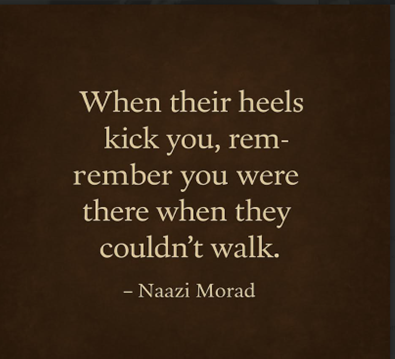
Ask me.
And I will tell you the kind of love that didn’t need applause
