Understanding the Science of Fear, Trauma, and Lasting Transformation
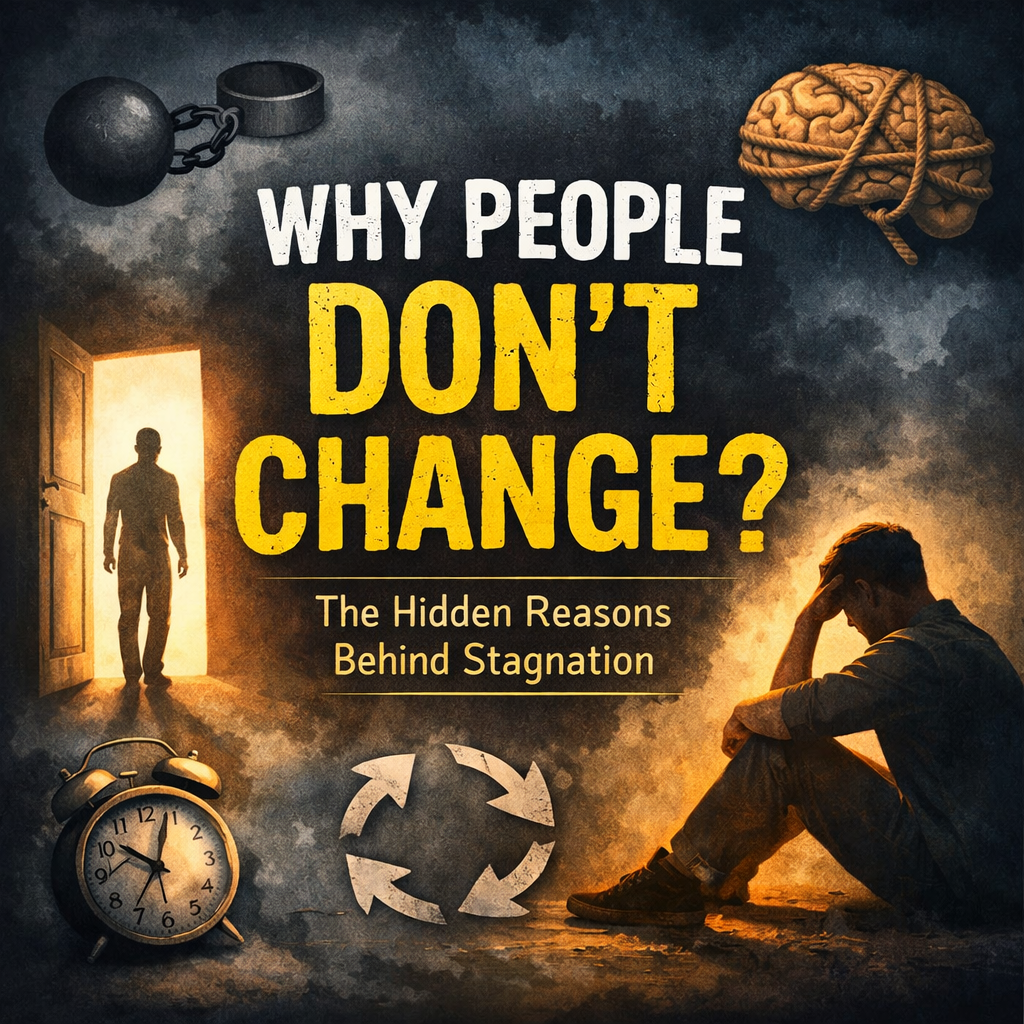
“If nothing changes, nothing changes.” It sounds simple. Yet millions of people remain trapped in the same painful relationships, destructive habits, toxic workplaces, addictions, anxiety, depression, and cycles of self-sabotage—not because they want to suffer, but because the human brain is wired to choose familiarity over uncertainty.
The greatest prison is rarely made of steel. It is made of thoughts.
Why Do People Stay Stuck?
As a Mental Health Practitioner, one of the most common questions I hear is:
“If they’re unhappy… why don’t they just leave?”
Whether it is an abusive relationship, alcohol addiction, chronic anxiety, people-pleasing, or staying in a career that destroys their mental health, the answer is almost never laziness.
The answer is psychology.
Human behaviour is driven far more by the subconscious mind than by logic. Research suggests that much of our daily behaviour operates automatically. The brain prefers patterns because patterns require less energy. Even painful routines become psychologically “safe” simply because they are familiar.
Your brain asks one question before every decision:
“Is this familiar?”
Not…
“Is this healthy?”
That distinction changes everything.
The Brain is Designed to Keep You Alive—Not Happy
Our brains evolved for survival. Thousands of years ago, survival meant avoiding danger. Today, your brain often mistakes change for danger. This activates the brain’s threat detection system, increasing stress hormones such as cortisol and adrenaline.
Your nervous system begins to interpret growth as a threat.
Suddenly…
- Starting therapy feels terrifying.
- Leaving a toxic relationship feels impossible.
- Applying for a new job feels overwhelming.
- Saying “No” feels dangerous.
Not because they actually are… Because your nervous system believes they are.
Trauma Rewires the Brain
One of the biggest reasons people remain stuck is unresolved trauma. Trauma doesn’t simply become a memory. It becomes a survival strategy. Psychological trauma changes how the brain processes safety, trust, attachment and emotional regulation.
People who experienced:
- Childhood neglect
- Emotional abuse
- Domestic violence
- Bullying
- Chronic criticism
- Abandonment
often develop protective coping mechanisms that once kept them safe.
Those coping strategies may include:
- People pleasing
- Emotional shutdown
- Avoidance
- Perfectionism
- Hyper-independence
- Overthinking
- Anxiety
- Self-sabotage
These behaviours are not personality flaws. They are survival responses.
The Comfort Zone Isn’t Comfortable
One of psychology’s greatest paradoxes is this:
People often choose familiar pain over unfamiliar peace. Why?
Because certainty feels safer than possibility. Someone may stay in an unhealthy marriage because they know exactly what tomorrow will bring. Leaving means uncertainty. And uncertainty activates fear. The brain frequently chooses predictable suffering instead of unpredictable healing.
The Identity Trap
Another hidden reason people resist change is identity. We don’t simply behave according to habits. We behave according to who we believe we are.
Consider these internal beliefs:
“I always fail.” – “I’m broken.” -“I’m difficult to love.” – “I don’t deserve happiness.” -“I’m just an anxious person.” – These beliefs become psychological identities. And your brain will unconsciously protect your identity—even if that identity causes pain.
Because changing behaviour means changing who you believe yourself to be. That is deeply uncomfortable.
Learned Helplessness
Psychologist Martin Seligman introduced the concept of Learned Helplessness. When people experience repeated failures, rejection or trauma, they eventually stop trying.
Even when opportunities appear. They begin believing: “Nothing I do matters.”
This mindset is common in:
- Depression
- Toxic relationships
- Workplace burnout
- Addiction
- Long-term anxiety
Eventually the person no longer lacks opportunity. They lack hope.
Fear of Success
Surprisingly…Some people fear success more than failure. Success creates responsibility. Visibility. Expectations. Pressure. Change. The subconscious may ask:
“What if I can’t maintain it?” “What if people expect more from me?” “What if I fail after succeeding?” So people unconsciously remain exactly where they are. Not because they cannot move.
Because staying still feels emotionally safer.
Emotional Addiction
This concept surprises many people. Our brains can become addicted—not only to substances—but to emotional states.
Chronic exposure to:
- Stress
- Chaos
- Drama
- Crisis
- Anxiety
can become the nervous system’s normal. Peace feels unfamiliar. Silence feels uncomfortable. Healthy relationships feel boring. This is why healing often feels strange before it feels peaceful.
Neuroplasticity: The Hope Your Brain Needs
Here is the extraordinary news. Your brain is not fixed. It is adaptable. This remarkable ability is called neuroplasticity.
Every new thought… Every healthy decision… Every boundary… Every therapy session… Every act of courage… creates new neural pathways. Change is literally built into the architecture of the human brain. Small, consistent actions reshape the brain over time. Healing is not magic.
It is repetition.
Why Therapy Creates Change
Therapy is not about someone “fixing” you.
It helps you:
- Understand unconscious patterns
- Regulate emotions
- Challenge distorted thinking
- Process unresolved trauma
- Build healthier coping skills
- Strengthen resilience
- Develop self-awareness
- Create lasting behavioural change
Real transformation begins when awareness meets action. Insight alone does not change lives. Practice does.
Five Questions to Ask Yourself Today
Instead of asking: “Why can’t I change?”
Ask yourself:
- What pain has become familiar?
- What fear is keeping me where I am?
- What belief about myself needs challenging?
- What would my life look like one year from now if nothing changed?
- What is one small step I can take today?
Remember…Healing rarely begins with giant leaps. It begins with one brave decision.
Final Thoughts
The hardest part of change is not knowing what to do. Most people already know. The hardest part is convincing a frightened nervous system that growth is safer than staying stuck. You are not weak because change feels difficult.
You are human. But your past does not have to become your future. Every day presents a new opportunity to rewrite your story. The door has always been there.
The question is…
Will you walk through it?
About the Author
Naazi Morad
Mental Health Practitioner | Accredited Life Coach
Wellness Within Therapy
Helping individuals overcome trauma, anxiety, depression, burnout, grief, addiction, and emotional overwhelm through evidence-based therapeutic approaches including CBT, DBT, mindfulness, and trauma-informed care.
Because healing doesn’t happen when life becomes easier… it happens when you decide you deserve better.
